


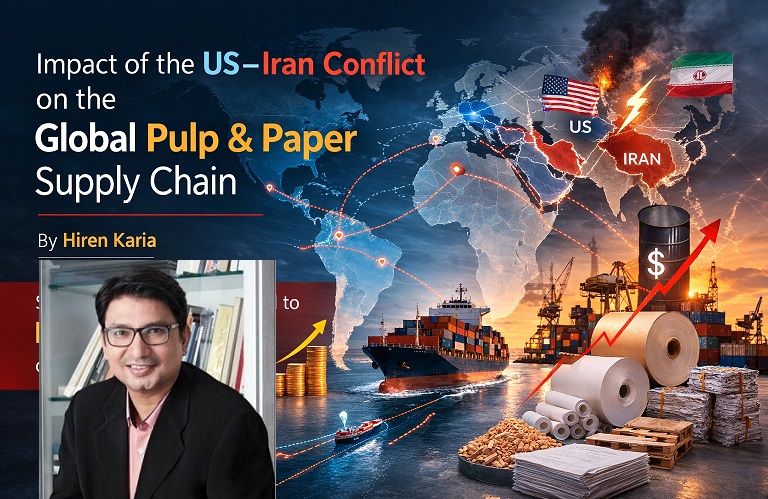
Impact of the US–Iran Conflict on the Global Pulp & Paper Supply Chain by Hiren Karia: Short-term volatility may lead to higher landed costs of pulp and recovered paper
Join WhatsApp Group, Telegram & YouTube Channel, No Spamming
 Join WhatsApp Group
 Join Telegram Channel
 Join YouTube Channel
 Join Job Channel (View | Submit Jobs)
 Join Buy Sell Channel (Free to Submit)
 Paper News Headlines Channel (Free to read)
Impact of the US–Iran Conflict on the Global Pulp & Paper Supply Chain by Hiren Karia: Short-term volatility may lead to higher landed costs of pulp and recovered paper
The ongoing West Asia crisis may impact India’s paper industry through higher energy prices, rising ocean freight rates, and disruptions in the import of key raw materials such as recovered paper, pulp, and coal. The Pulp and Paper Times talks to Mr. Hiren Karia, Convener – International Trade Committee, Federation of Paper Traders Associations of India (FPTA). Here are his views:
 The Pulp and Paper Times
The ongoing geopolitical tensions between the United States and Iran have the potential to disrupt several global commodity supply chains, including the pulp and paper sector. While the direct trade of paper between these countries and India is limited, the broader implications of such conflicts are often felt through energy markets, logistics routes, and overall global trade sentiment.
One of the most immediate impacts of a prolonged conflict could be a sharp rise in crude oil prices. Since shipping, freight, and logistics costs are closely tied to fuel prices, any sustained increase in oil could significantly raise ocean freight rates. For a country like India, which relies heavily on imports of waste paper and pulp, higher freight costs would directly increase raw material procurement costs for paper mills.

Waste paper imports—particularly from the United States and Europe—are critical for many Indian recycled paper mills producing WPP (Waste Paper Based) grades such as kraft and packaging paper. If the conflict disrupts shipping lanes in the Middle East region or increases insurance premiums for vessels passing through sensitive areas like the Strait of Hormuz, supply chain delays and additional logistics costs could become unavoidable.
Similarly, global pulp markets could witness short-term volatility. Any instability in international shipping or currency fluctuations can quickly translate into higher landed costs of pulp and recovered paper. Mills operating on thin margins may find it difficult to absorb these increases, which could ultimately push finished paper prices upward in the domestic market.

Another factor to consider is market sentiment. In times of geopolitical uncertainty, traders and suppliers often adopt a cautious approach, sometimes holding back shipments or revising price offers in anticipation of higher costs. This behavior can tighten supply availability in the short term.
If the conflict continues for another 10–15 days, the industry may begin to see a more visible impact—particularly in freight rates, insurance surcharges, and currency volatility. However, if the situation stabilizes quickly, the impact may remain largely psychological rather than structural.
Overall, while the Indian paper industry has demonstrated resilience in navigating global disruptions in recent years, a prolonged geopolitical conflict could temporarily increase input costs for WPP mills and place upward pressure on finished paper prices.

West Asia Crisis May Impact India’s Paper Industry Through Energy Costs, Exports, Freight and Imports: Rohit Pandit
“Higher prices of energy will adversely impact India’s paper industry as it is an energy-intensive sector. Exports of India’s paper industry will be impacted as West Asia is an important export destination. Higher ocean freight rates (due to higher fuel costs, higher insurance, longer transit time, etc.) will impact exports of India’s paper industry.
Dumping of paper at predatory prices in the Indian market by China and Indonesia will intensify as their markets in West Asia will be impacted, and it will lead to trade diversion. Export-driven Asian economies (China, Indonesia) will further push their excess inventories into the Indian market.” Rohit Pandit, Secretary General, Indian Paper Manufacturers Association (IPMA), shared his views on LinkedIn.
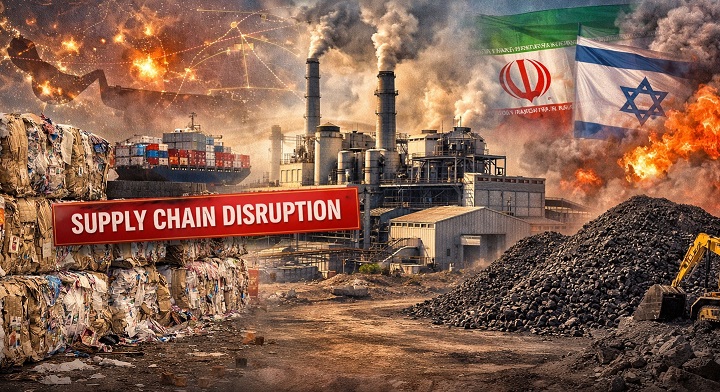
Mr. Pandit further stated that import of raw material/intermediates (recovered paper, pulp, coal) by India’s paper industry will be adversely impacted due to higher ocean freight rates and blockage of some sea routes.
Web Title: Impact of the US–Iran Conflict on the Global Pulp & Paper Supply Chain by Hiren Karia: Short-term volatility may lead to higher landed costs of pulp and recovered paper
More News From india






{{ item.Title }}